Case Study — 2026
Blue Claw Country is an independent country music artist brand — built from nothing, with no agency, no development team, and no production budget. Just a Creative Director who decided to think in systems and execute all of it at once.
This isn't a story about AI replacing creative work. It's about what becomes possible when a senior creative with 20 years of experience uses AI as a force multiplier — and stops waiting for a team to catch up.
In roughly eight days of concentrated work, the equivalent of a full agency engagement was conceived, designed, written, engineered, and launched. The strategy was weeks deeper than that.
Four months ago, I sat down with my friend Gary, a writer and strategist I've known for many years, to brainstorm promotion for a new EP. What started as a creative coffee turned into four hours of conversation. The next morning, he had a revelation: everything in my life, every choice I'd made over forty years, was already operating under a single coherent aesthetic. He told me the name: Blue Claw Country. He was right. I'd lived it forever. I just hadn't named it yet.
Every deliverable in this case study — every color, every rule, every photograph direction, every word — exists to serve music that one person wrote — and the community that proves he wasn't the only one.
The Blue Claw Country manifesto isn't strategy. It's autobiography. "Where backroads meet the boardwalk" wasn't workshopped — it's a life. Sandy Soil, Pine Barrens, the instruction that photographs should feel like they were taken at 6:42pm after a long day — that's not a creative brief. That's a person on the page.
The brand works because it can't be faked. It's rooted in generations of coastal Jersey, in working-class summers and pine-filtered light — and the quiet pride of people who know exactly where they're from. In three children. In a Half Ironman finish line. In songs that found their way onto NBC before most people knew his name. In decades of creative work that taught him exactly how to say the thing without shouting it.
You can teach someone to use AI. You can teach creative process, brand architecture, front-end development. You cannot teach a person to have lived the thing they're building.
Full Blue Claw Country campaign document: audience strategy, platform-by-platform content direction, release campaign architecture, merch strategy, partnership framework, and fan community playbook. A complete operational guide for the next phase of the brand.
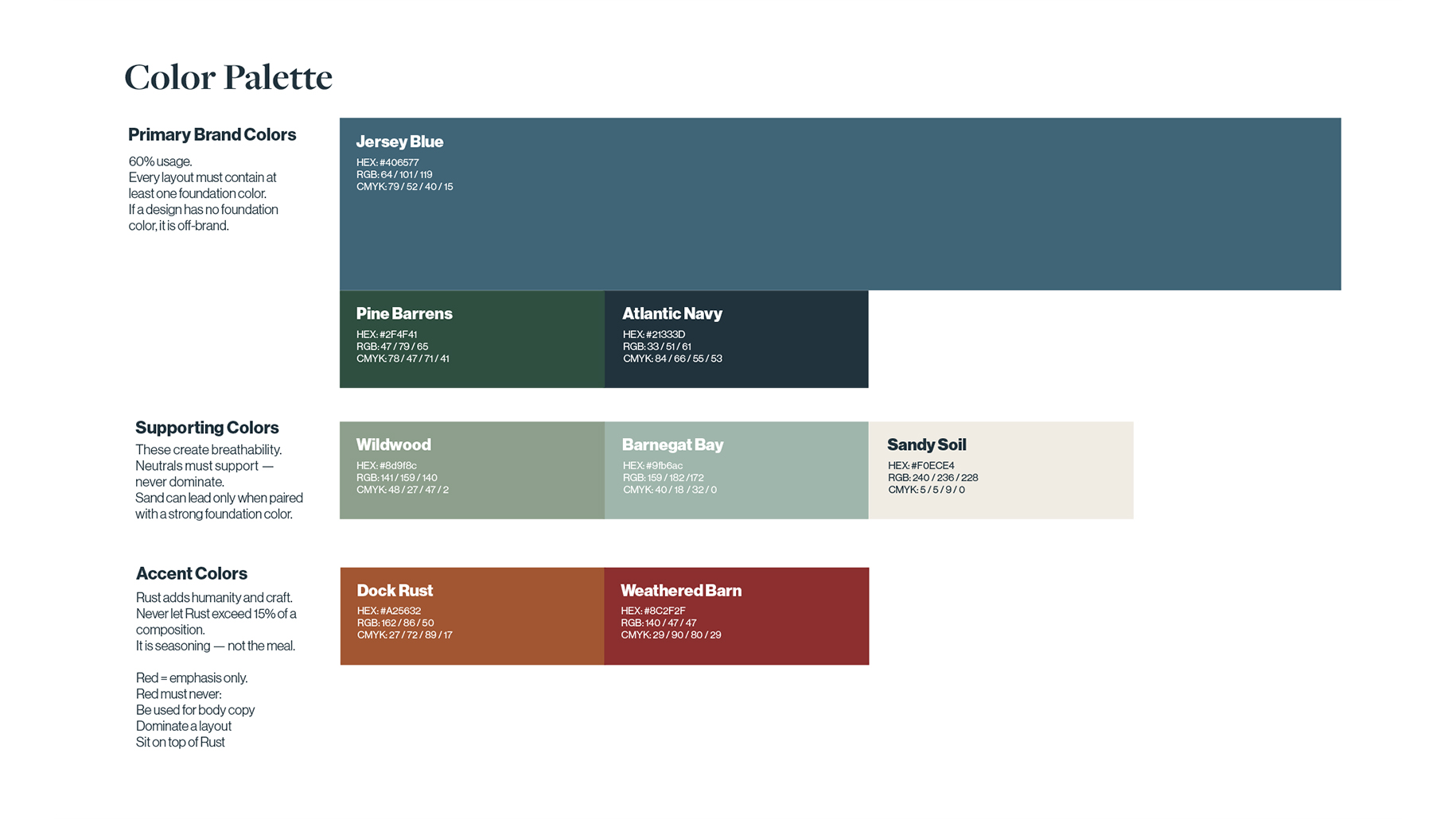
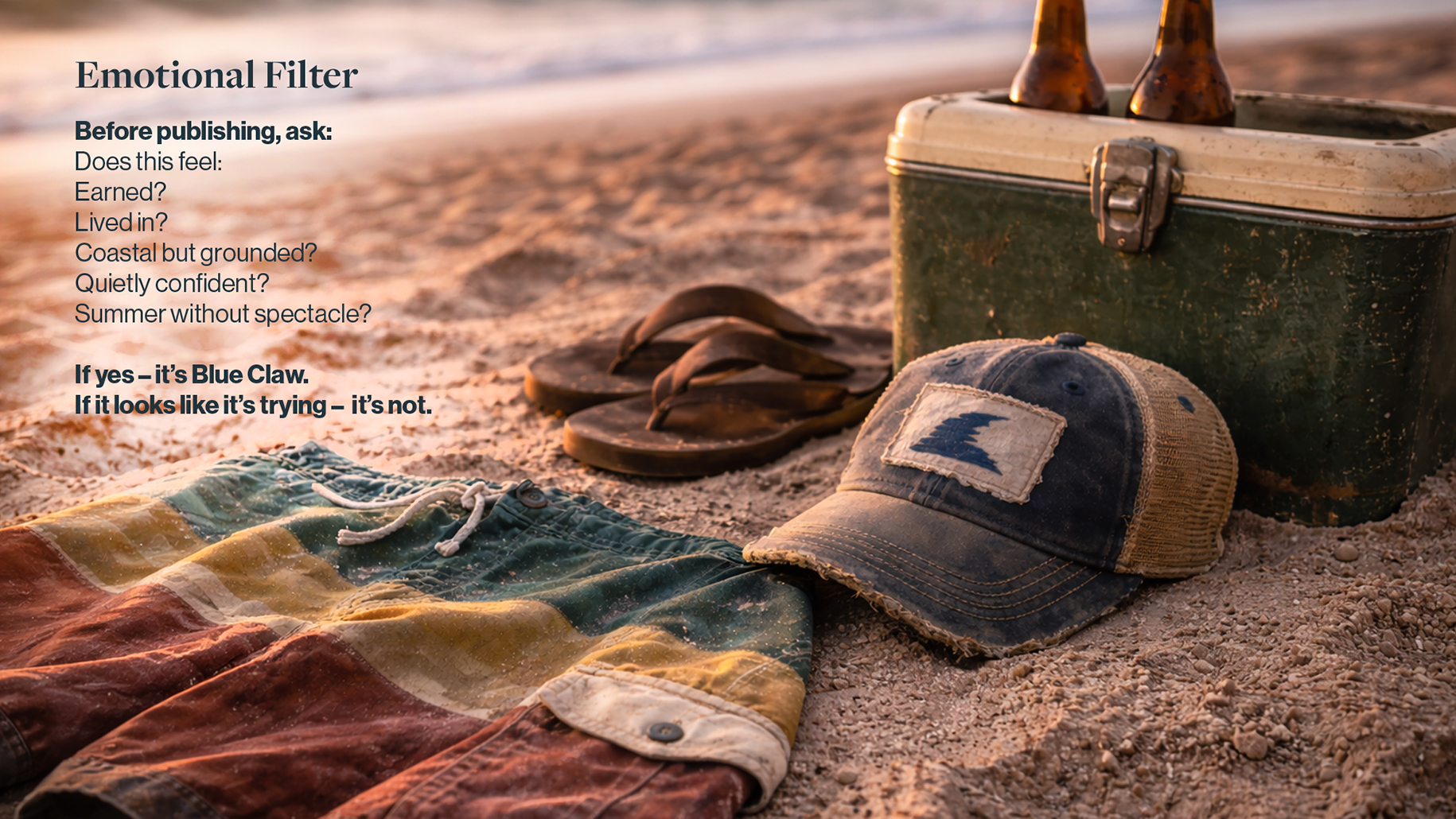
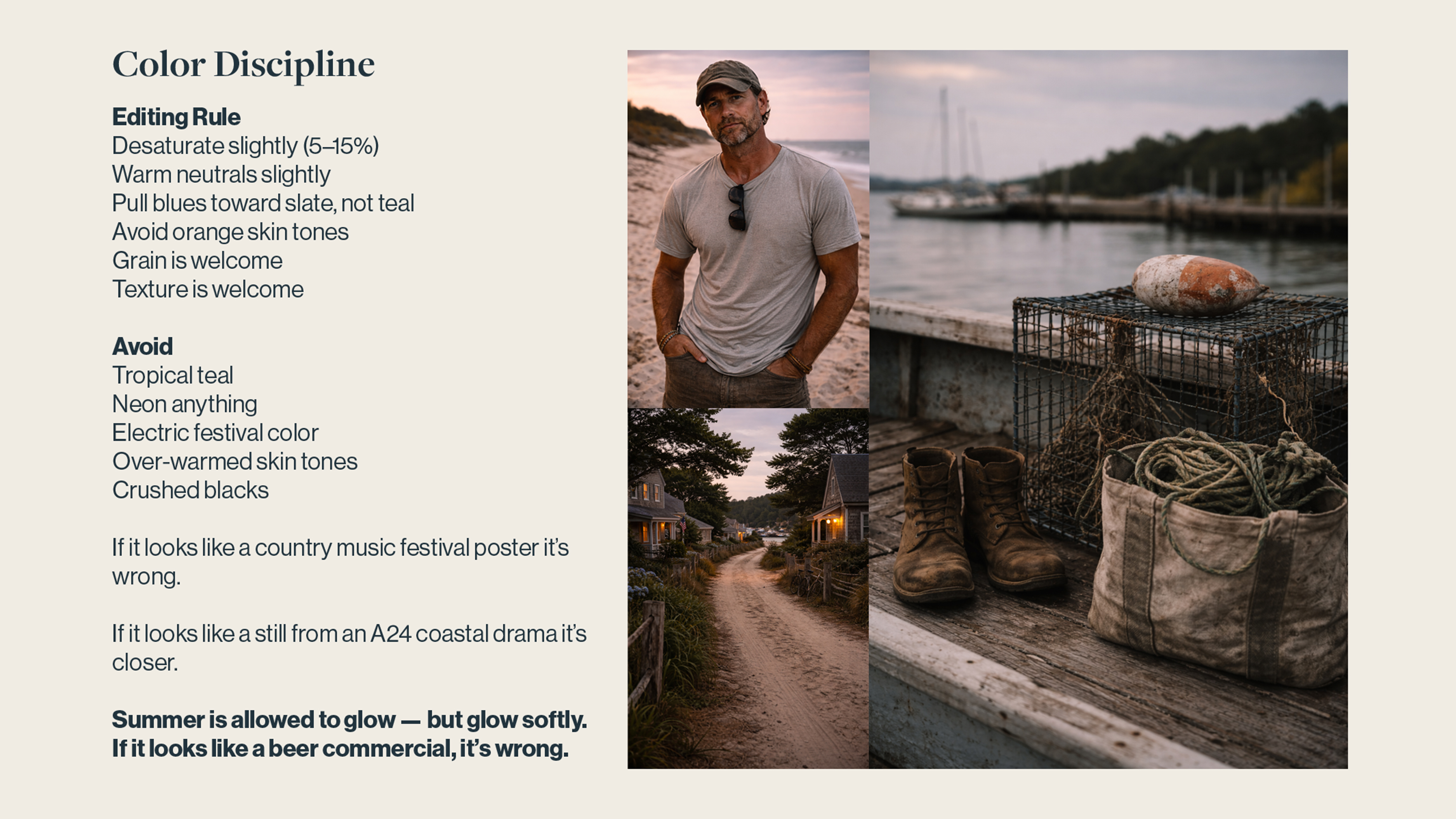
38-page complete brand system: artistic identity framework, color architecture (8 named colors with usage rules), typography system, photography direction, wardrobe guidelines, and emotional filter rules. Comparable to what a major label commissions for a signed artist.
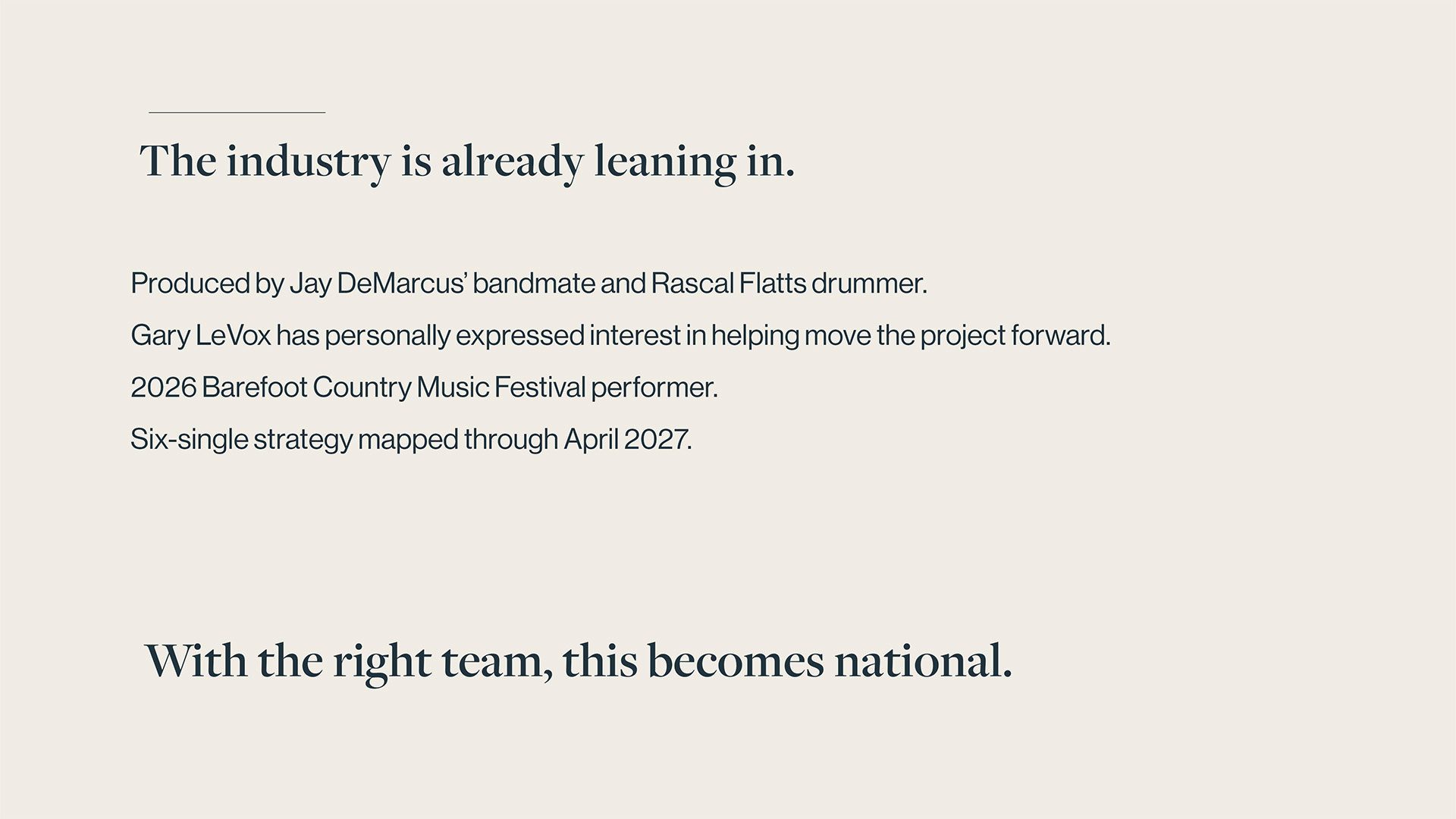
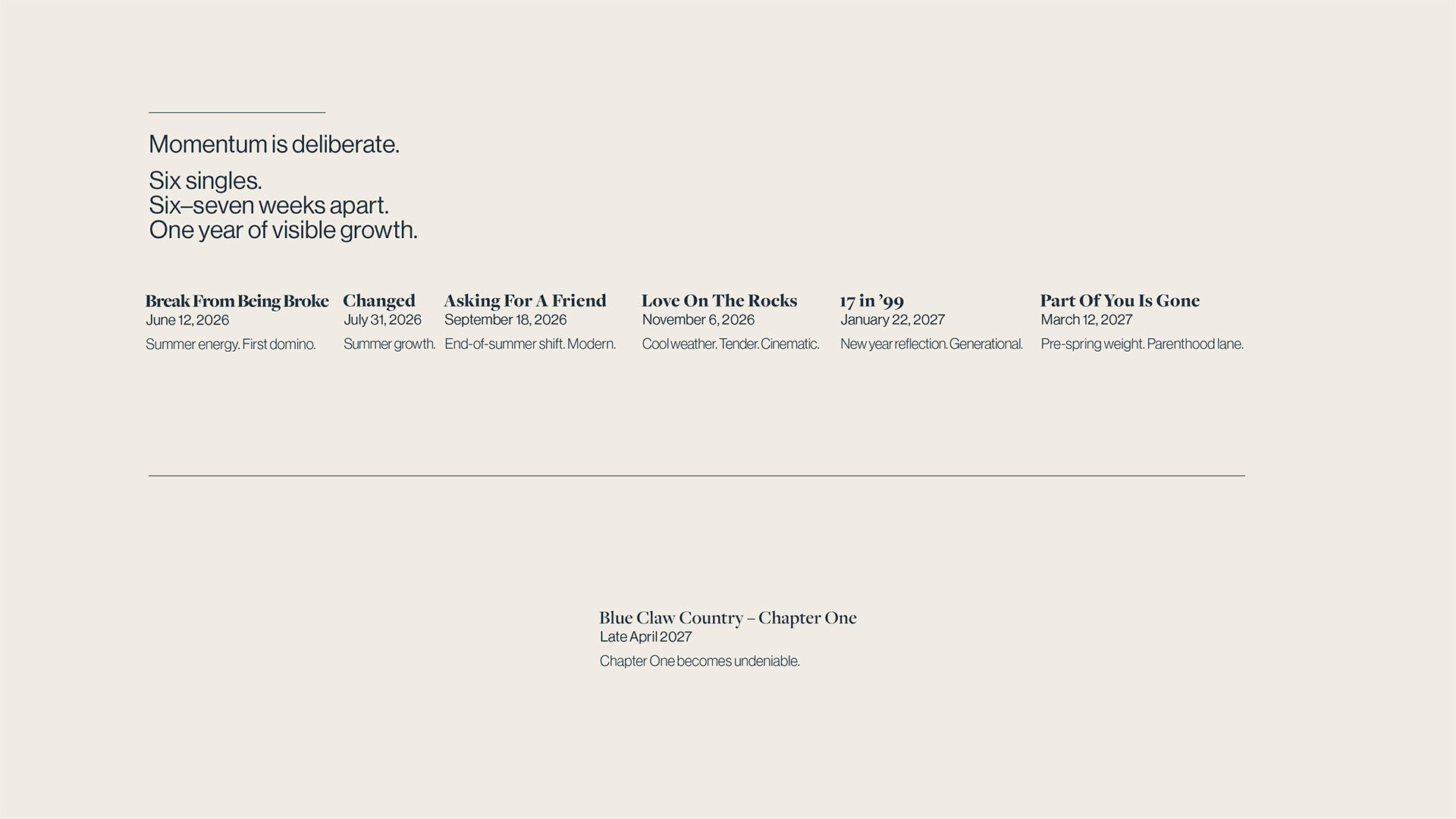
Full strategic roadmap: six-single release calendar through April 2027, live performance strategy, audience accumulation model, and industry positioning. Built to be presented to labels, managers, and investors.
Two fully interconnected sites — blueclawcountry.com and craigwhitakermusic.com— each with distinct voice, visual language, and purpose. JSON-driven content system, campaign pages, and full mobile-responsive implementation.
Two full campaign pages — a Wildwood beer collaboration with King's Road Brewing and a fan-sourced music video campaign for "Where We Grew Up" — each with unique visual treatment and conversion CTAs.
Full Mailchimp integration with unified signup flows, segmentation strategy, audience architecture, and a complete email sequence framework for fan onboarding and release campaigns.
Firebase-powered project management system with real-time sync, automated morning briefings via Cloud Functions, AI integration, PWA mobile functionality, and 12 business pillars. A custom tool a dev shop quotes at $25K–$75K.
End-to-end publishing infrastructure: ASCAP publisher affiliate setup, Songtrust registration strategy, MLC enrollment, and a sync licensing framework — built to capture revenue most independent artists leave behind.
Electronic press kit, content calendar, press release templates, artist bio suite, and a Barefoot Country Music Festival strategy — all written, designed, and production-ready.
A codified creative brief: three brand pillars, emotional core, positioning, song-by-song narrative architecture, and live performance strategy. The kind of document labels use to guide a career.
Source: Clutch.co agency pricing benchmarks, Feb. 2026 — based on verified client reviews across 79,000+ agencies. Average web dev project: $66,499 / 9 months. Average UX project: $84,973 / 10 months. Hourly rates: $100–$149/hr. Figures above reflect comparable scope; full engagement including brand strategy, publishing infrastructure, and custom tooling would exceed these baselines significantly.
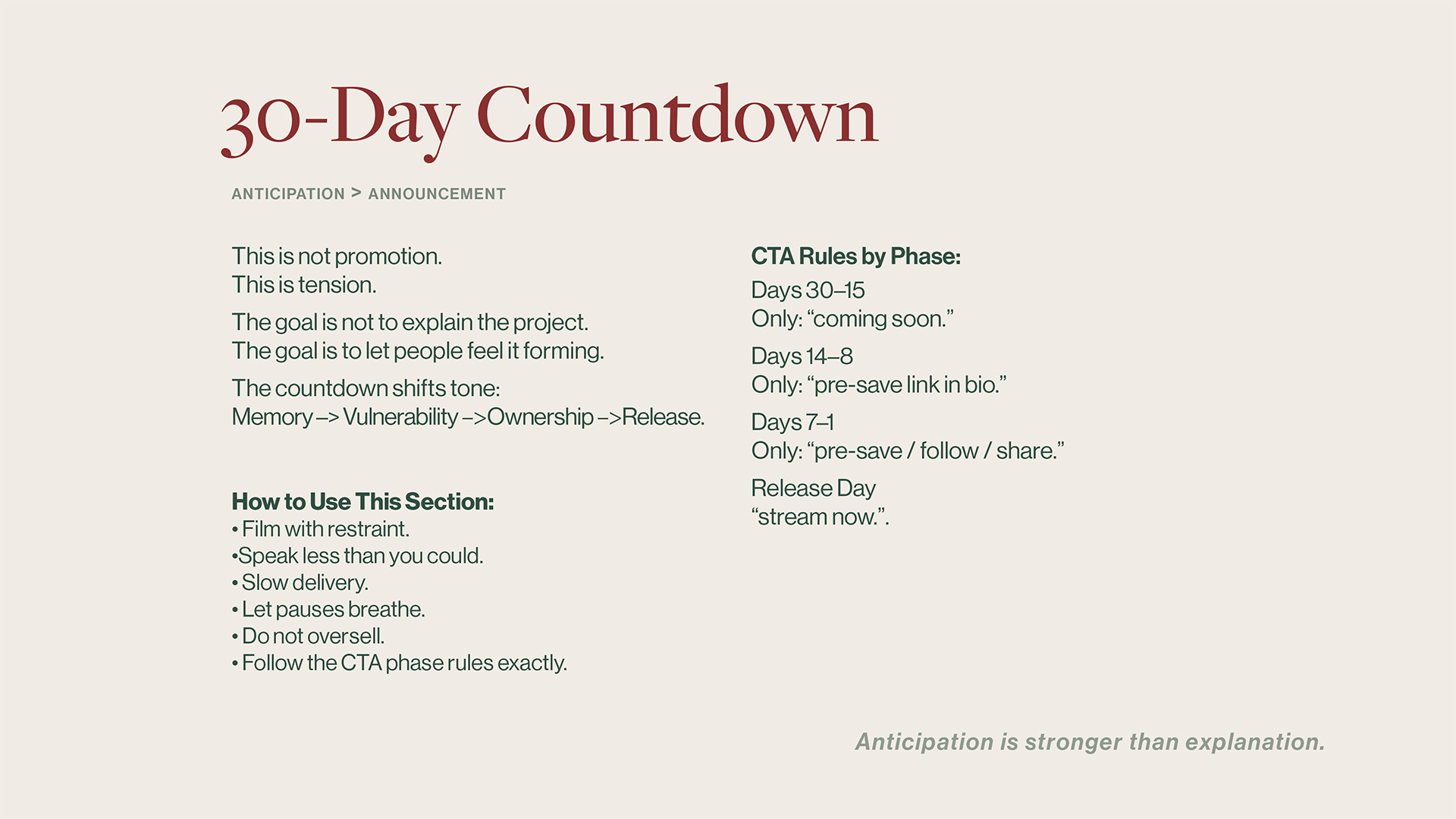
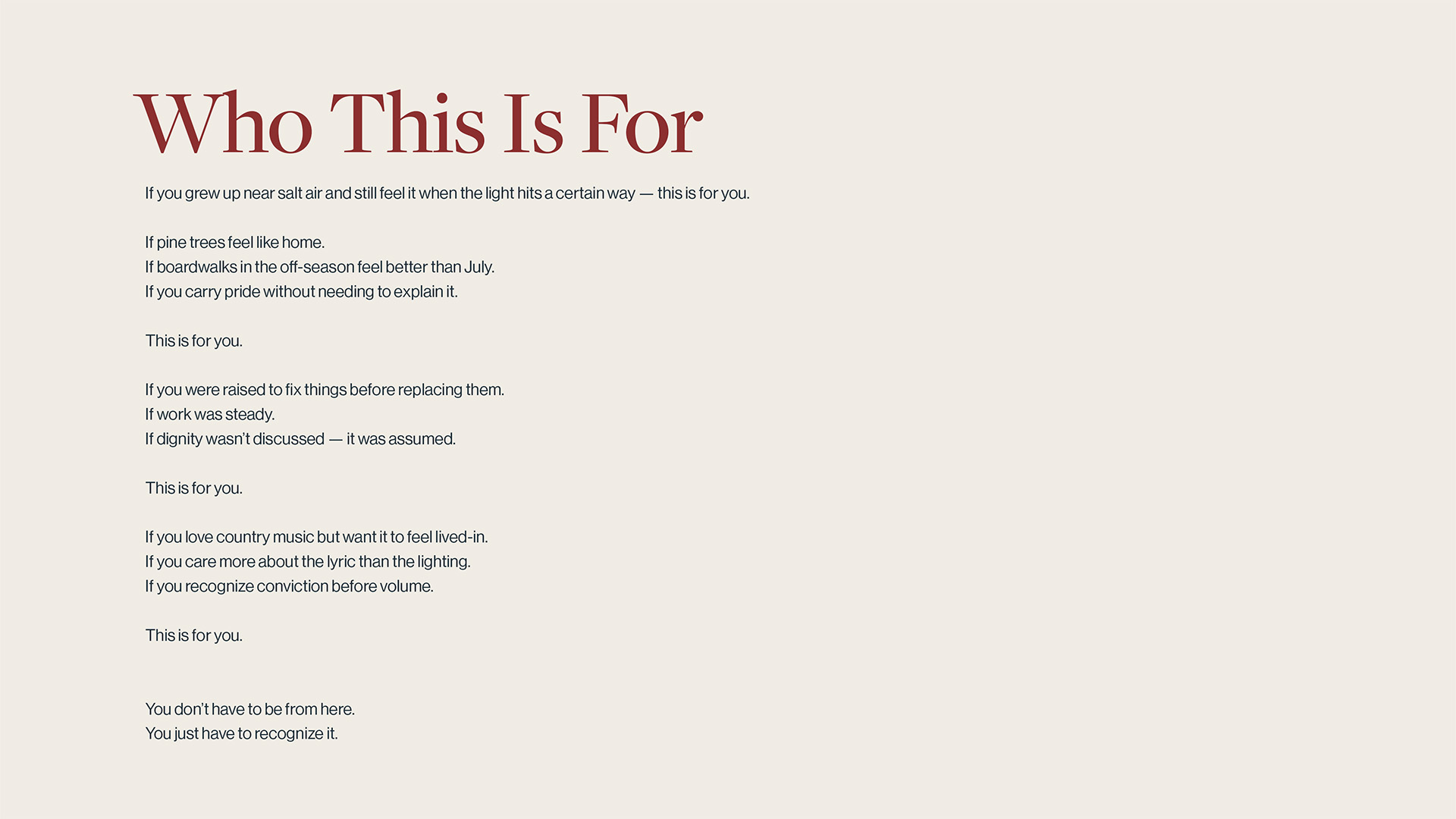
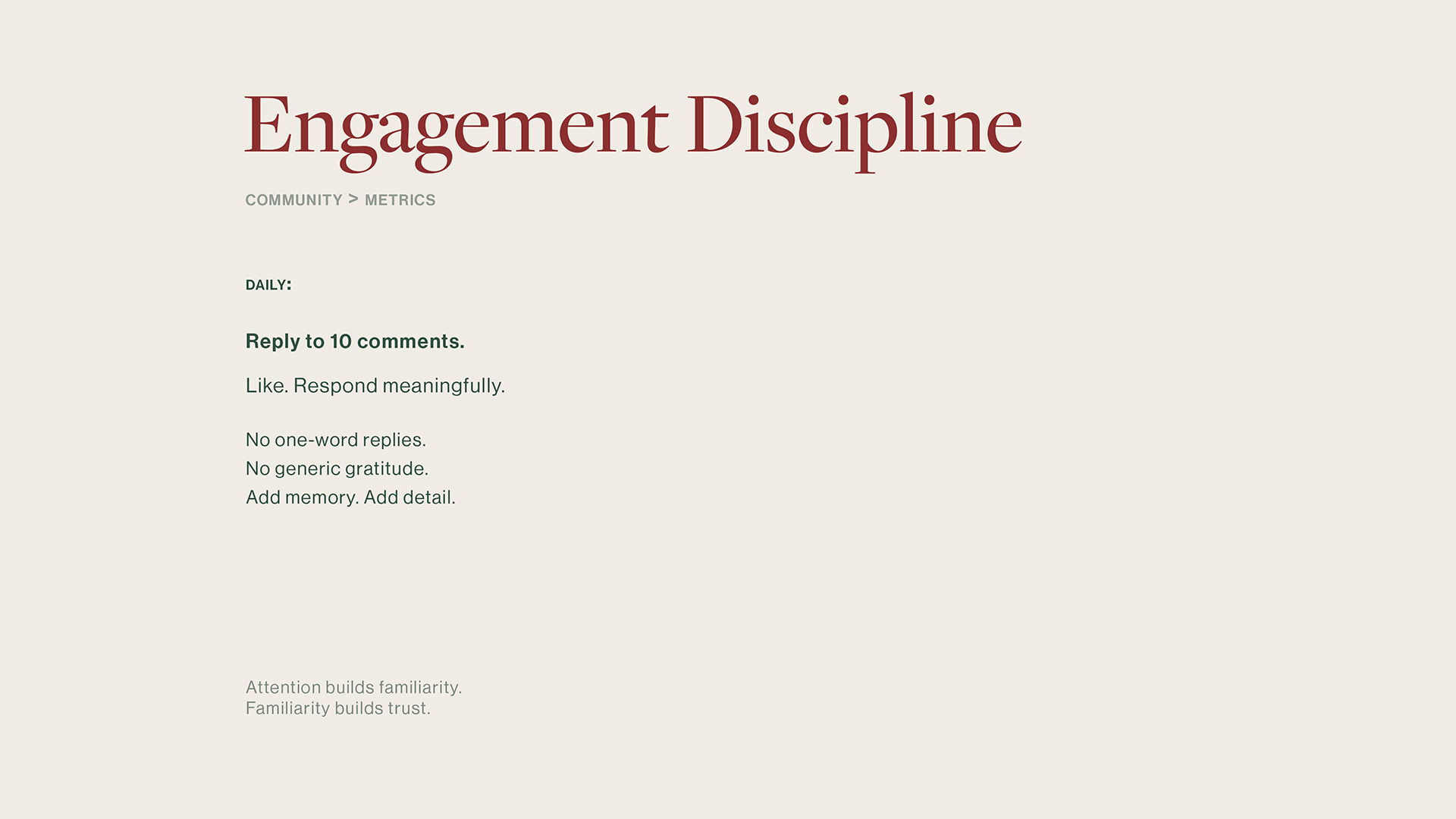
Selected pages from the Brand Bible, Growth Plan, and campaign assets. This is what a few weeks of strategy and eight days of execution look like.
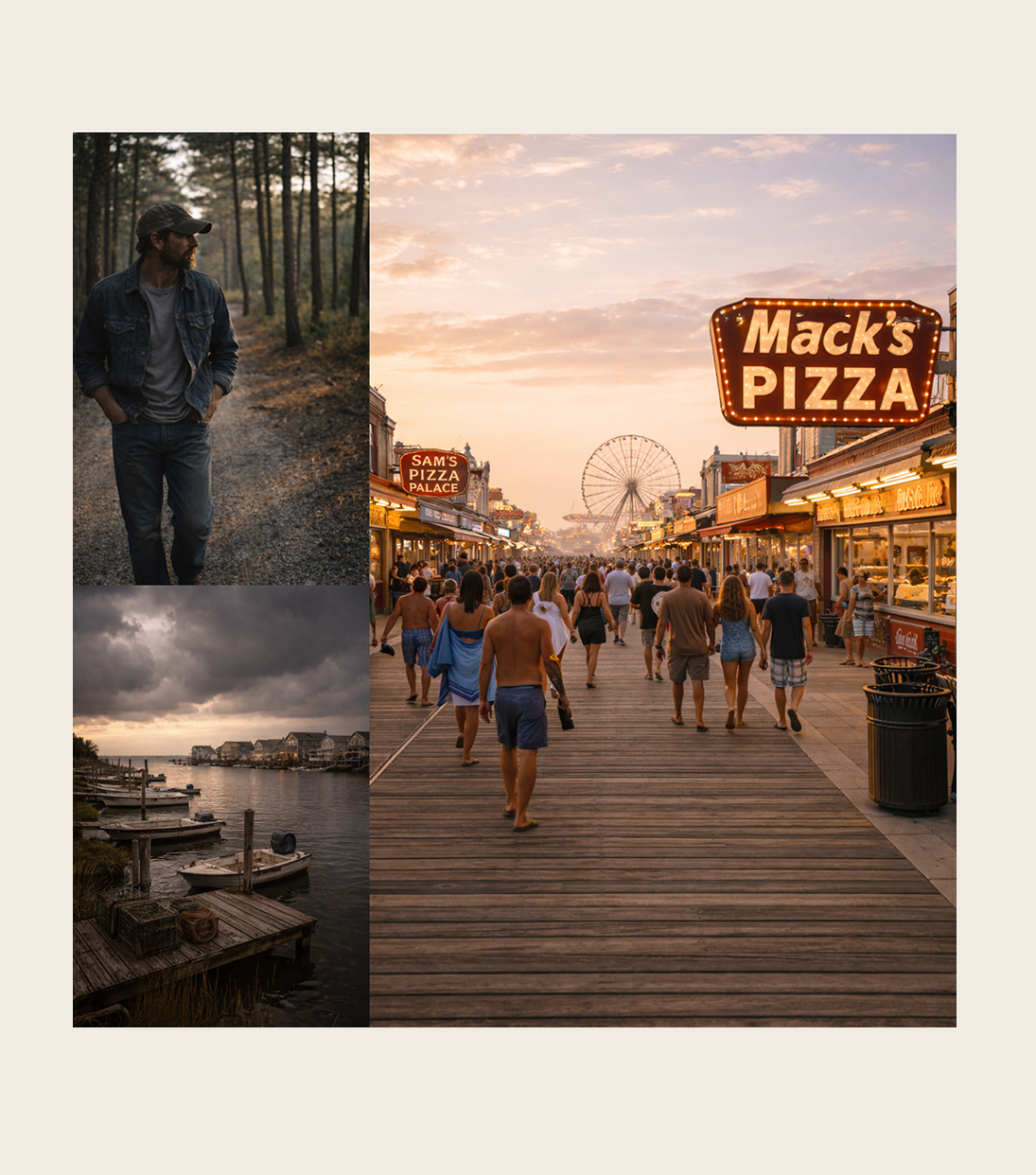
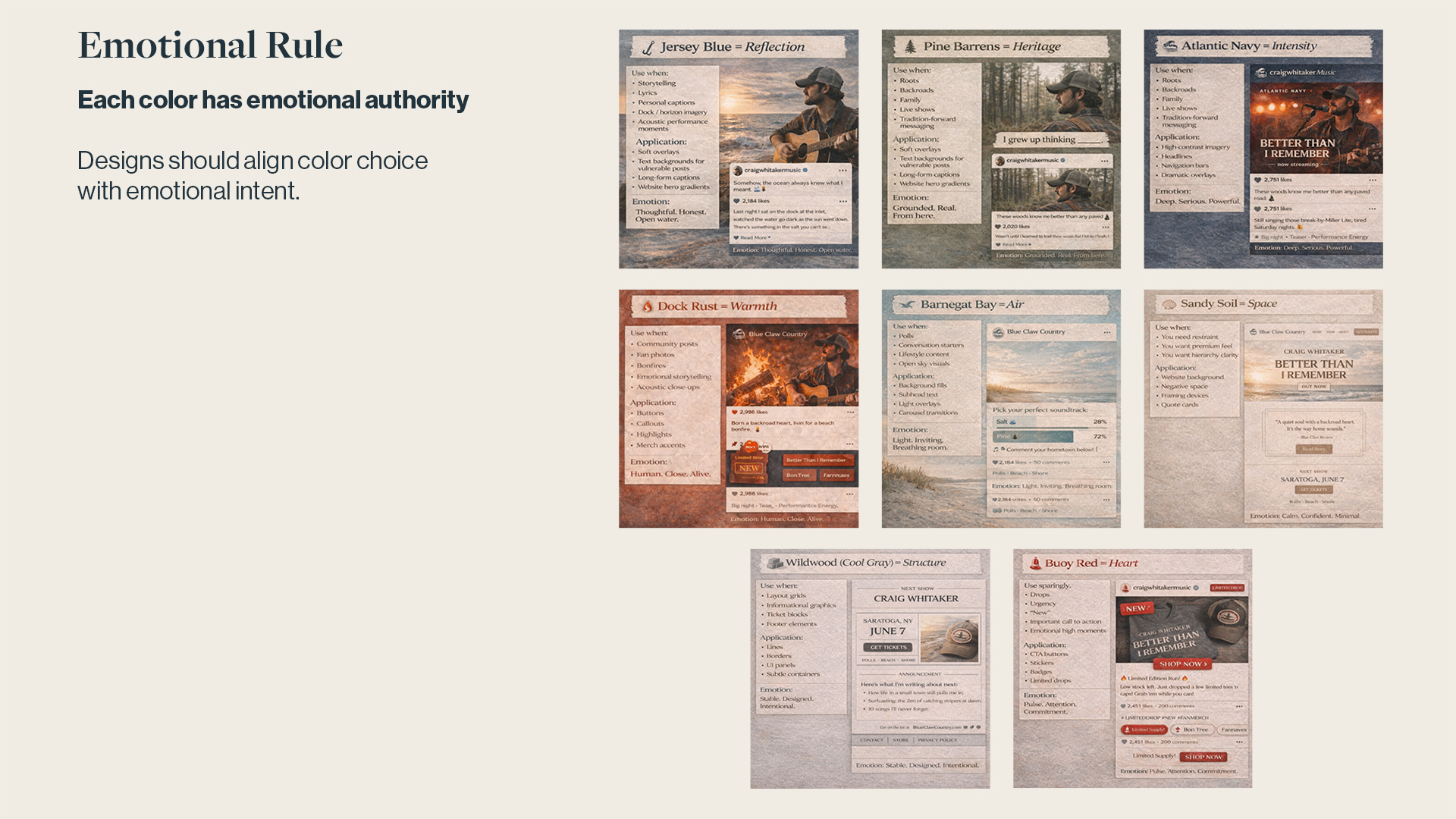
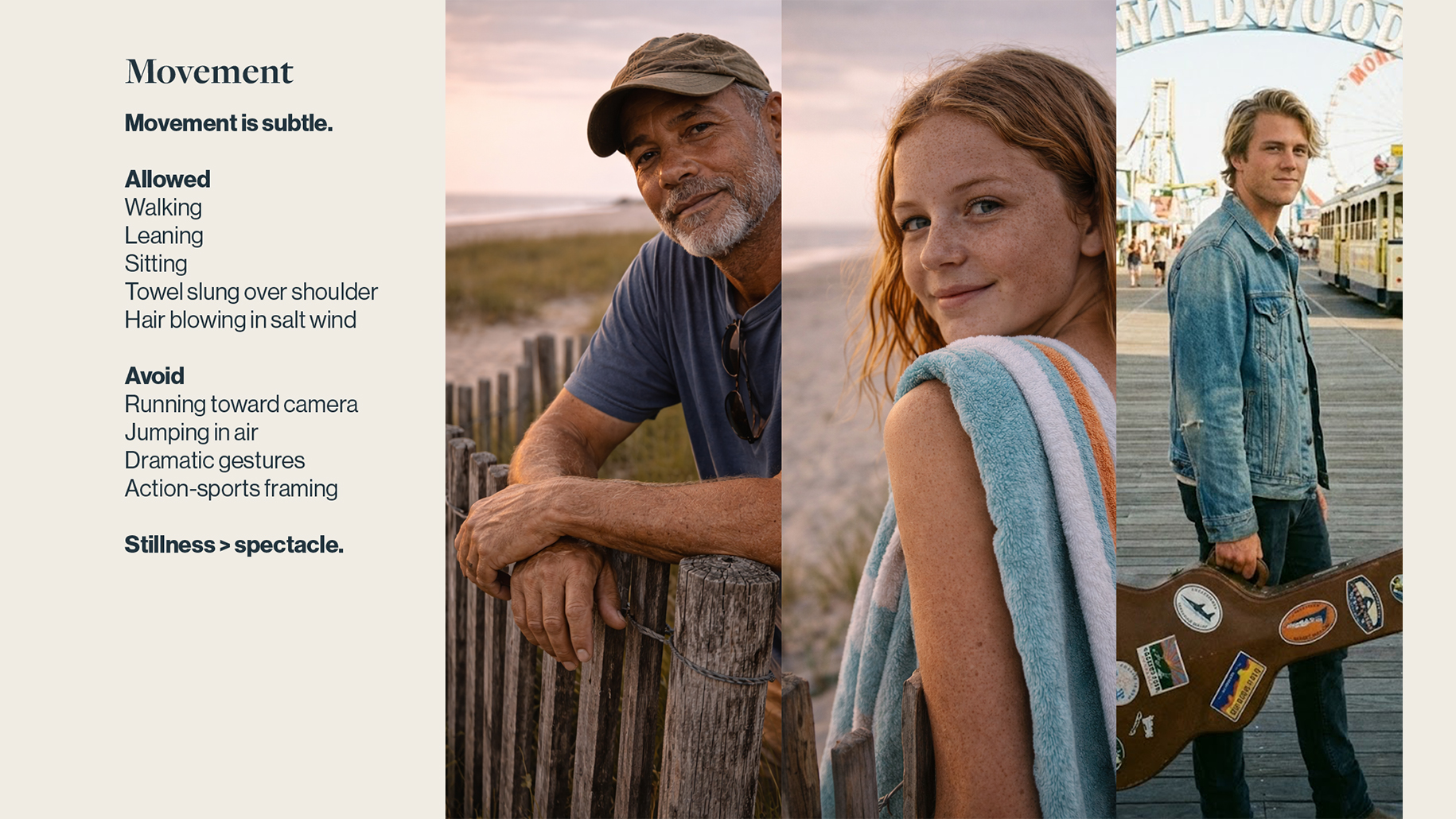
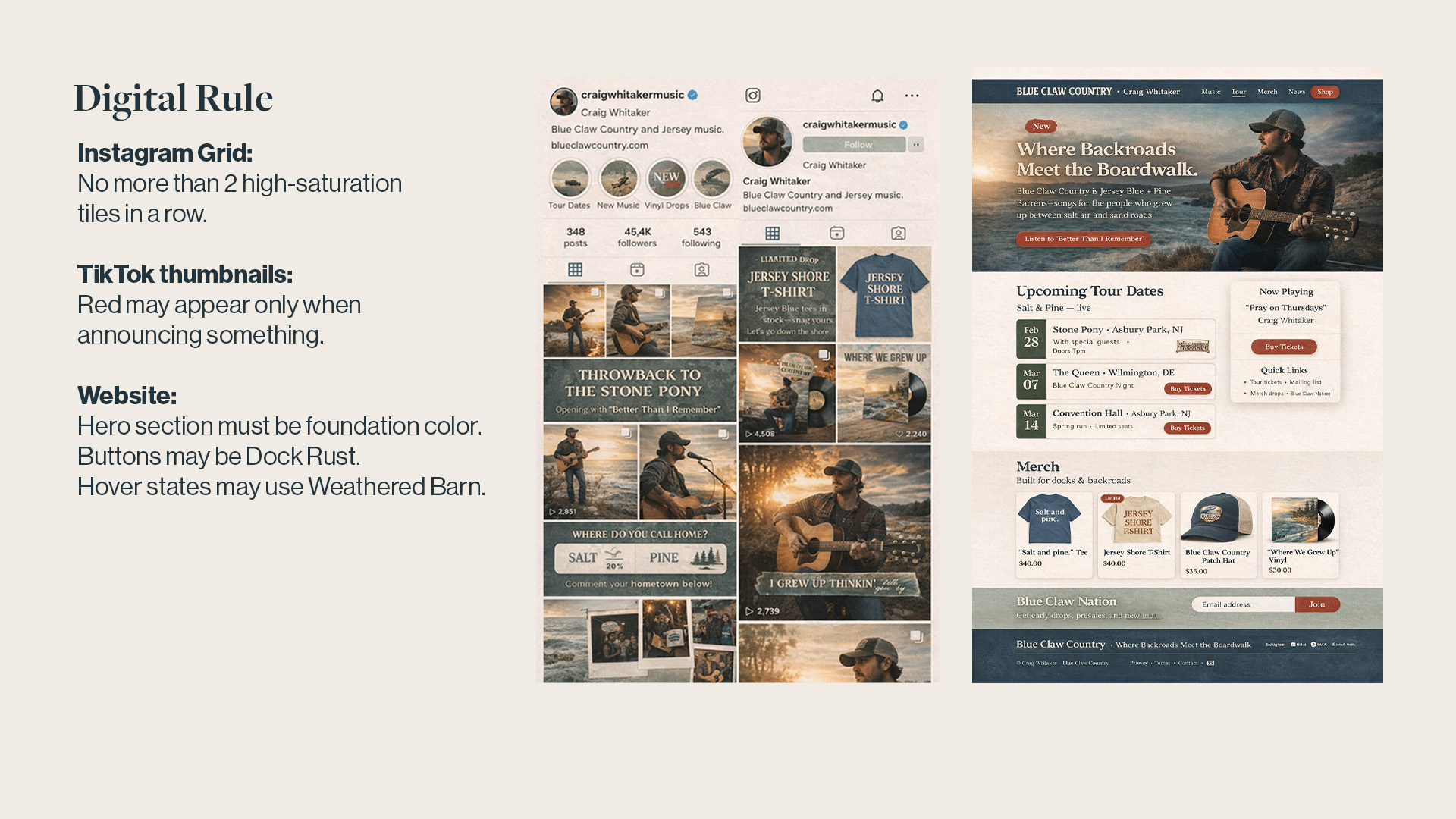
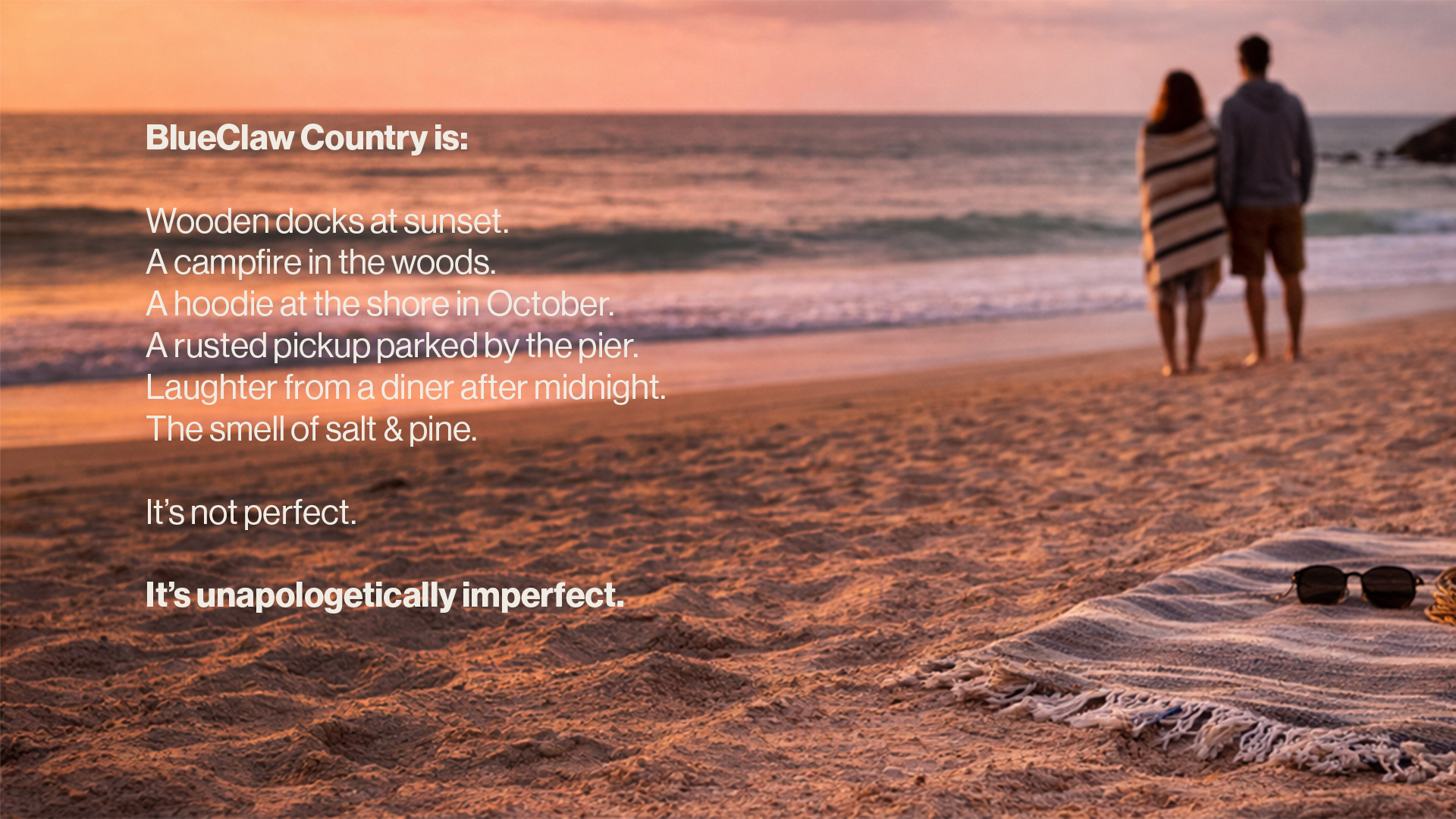
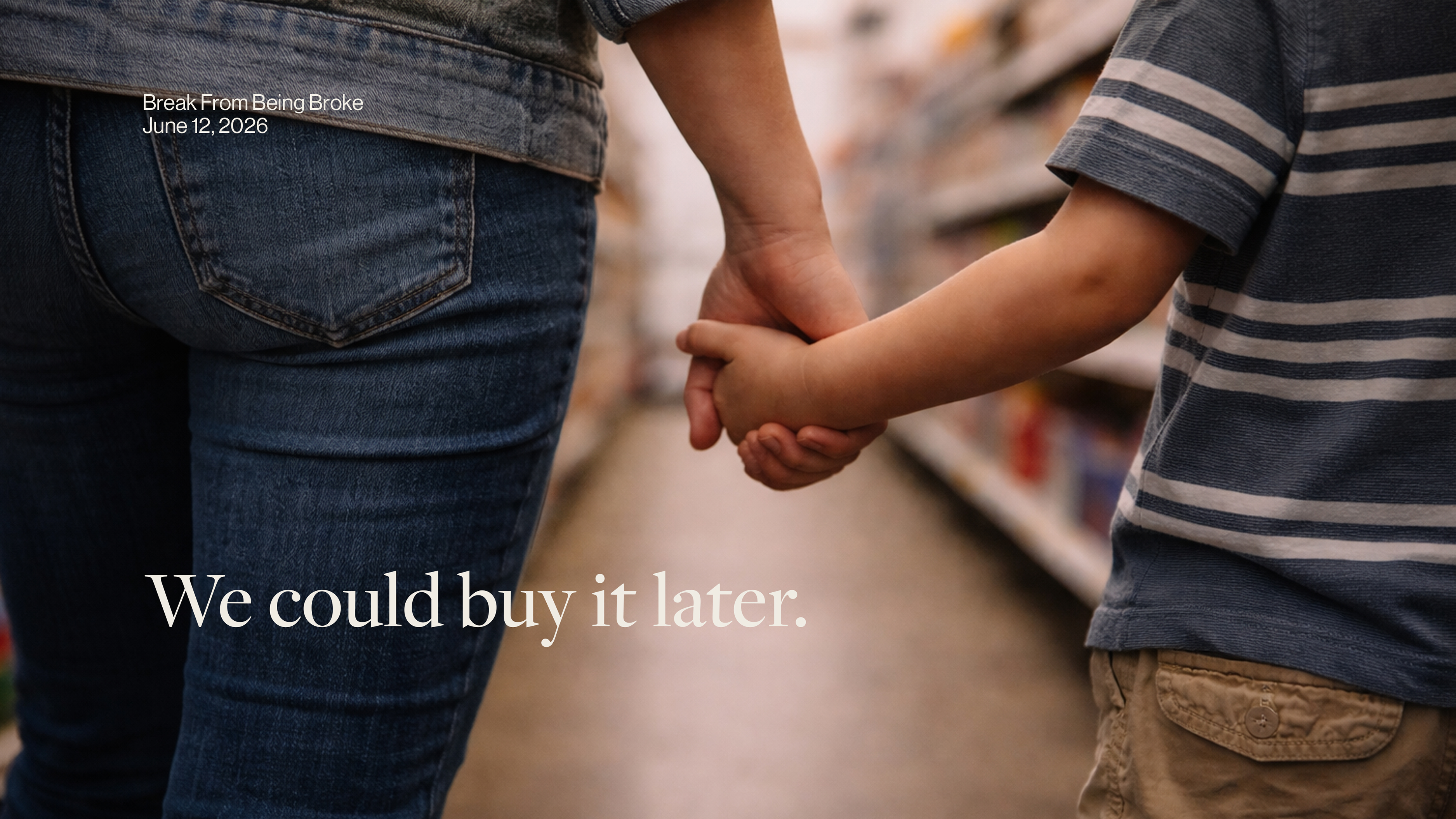
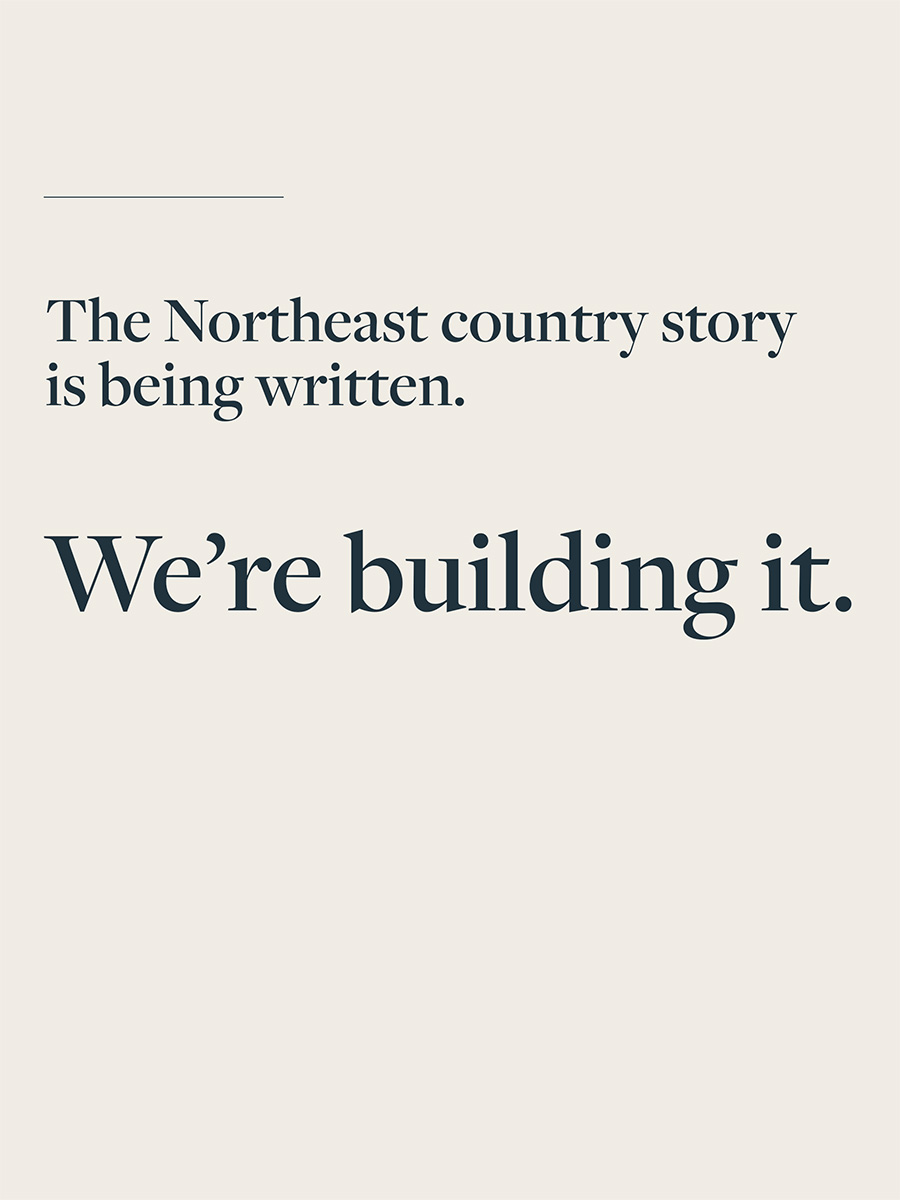
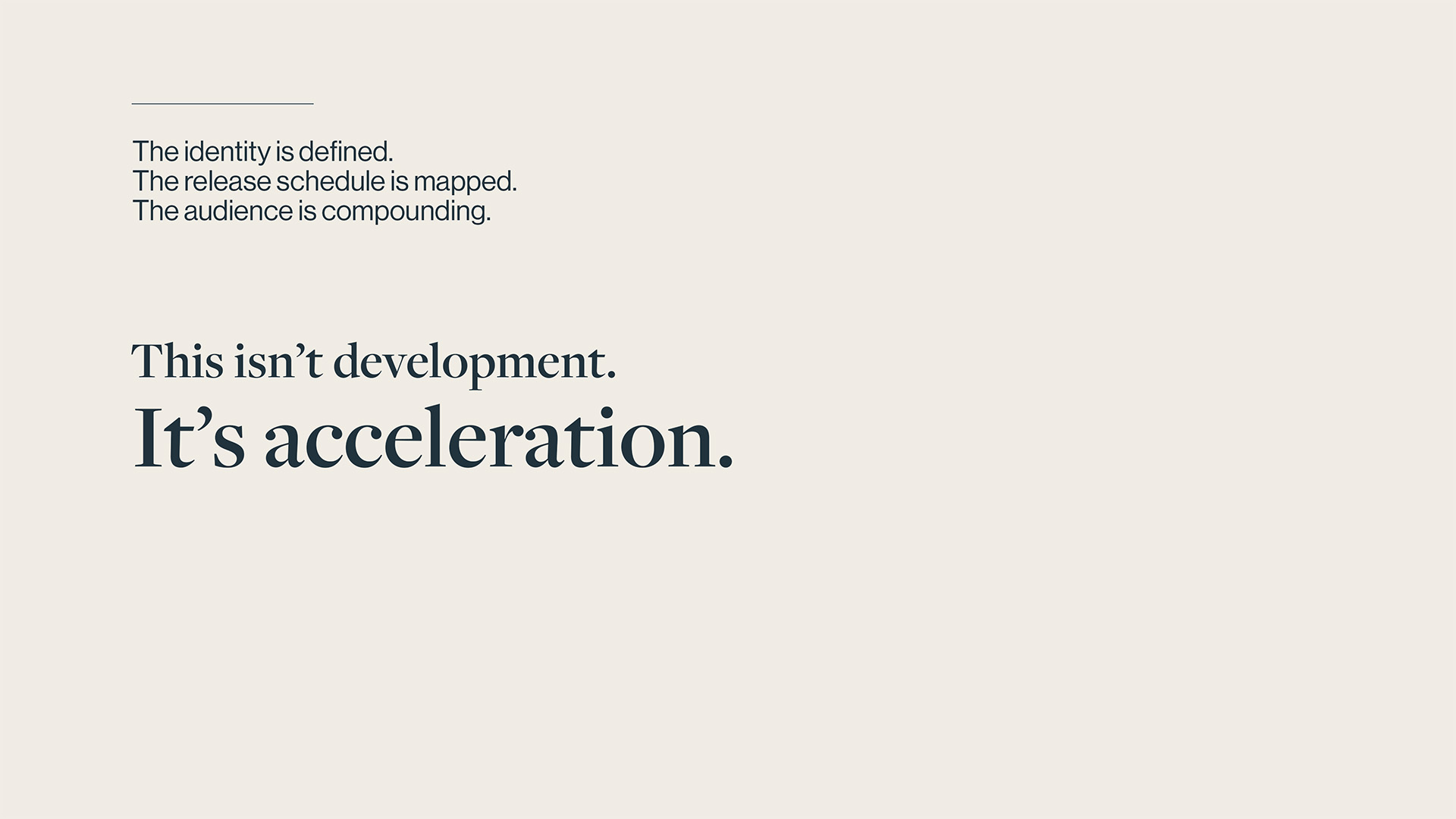
This is not prompt engineering. It's 20 years of creative and strategic experience directed through a new kind of collaboration. The thinking is human. The throughput is unprecedented.
Every deliverable was conceived as part of an interconnected whole. Brand, content, tech, audience, and revenue infrastructure designed to work together from day one — not bolted on retroactively.
Voice, aesthetic, story, and strategy were never delegated. AI handled execution — code, copy drafts, structure — under tight human creative direction. The quality comes from the brief, not the tool.
UX, front-end engineering, brand writing, content strategy, email marketing, music publishing, and industry strategy — all executed by one person who refused to treat any of it as someone else's job.
Traditional agency timelines exist because of handoffs, approvals, and communication overhead. Remove those constraints and the creative process compresses dramatically — without losing depth or quality.
"AI tools are the gasoline for the fire that started in my brain over 40 years ago." — Craig Whitaker
The traditional agency model assumes separation of roles: strategists hand off to designers, designers hand off to developers, developers hand off to writers. That model was built around scarcity — of time, access, and tools.
What this case study demonstrates is something more valuable than a cheaper vendor: a creative leader who can think at the systems level and execute at the production level simultaneously.